Juliana Dias | Digital Garden
Finite State Machine
Aug 10, 2017Sometimes we need to apply a state in some cases when we want to modify a status of an object. A basic example is water state: gaseous, liquid and solid and the events responsible for change it:
Object: Water
Event: Fusion States: From solid to liquid
Event: Evaporation States: From liquid to gaseous
Event: Condensation States: From gaseous to liquid
Event: Solidification States: From liquid to solid Look at this as a simple example that happens around us. As in many other cases, we can apply it in programming using something called state machine.
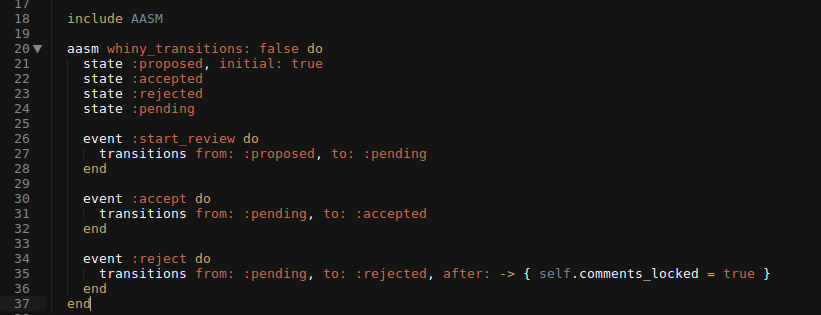 In the above example, we have different states and events responsible for change these states. Proposed, accepted, rejected and pending are possible states for a object and the state of an object can change when an event occurs. Pretty similar to the example of water states, right?
Originally published at **medium.com* on August 10, 2017.*
Finite State Machine was originally published in MeuCredere on Medium, where people are continuing the conversation by highlighting and responding to this story.